London remains the beating heart of experiential retail. From Covent Garden takeovers to Westfield activations, brands keep returning to the capital for its footfall, media coverage and culturally switched-on shoppers. But a pop-up shop launch that delivers results doesn't happen by accident — it's the product of careful planning, the right location and a team who understands the city's quirks. Here's our playbook.
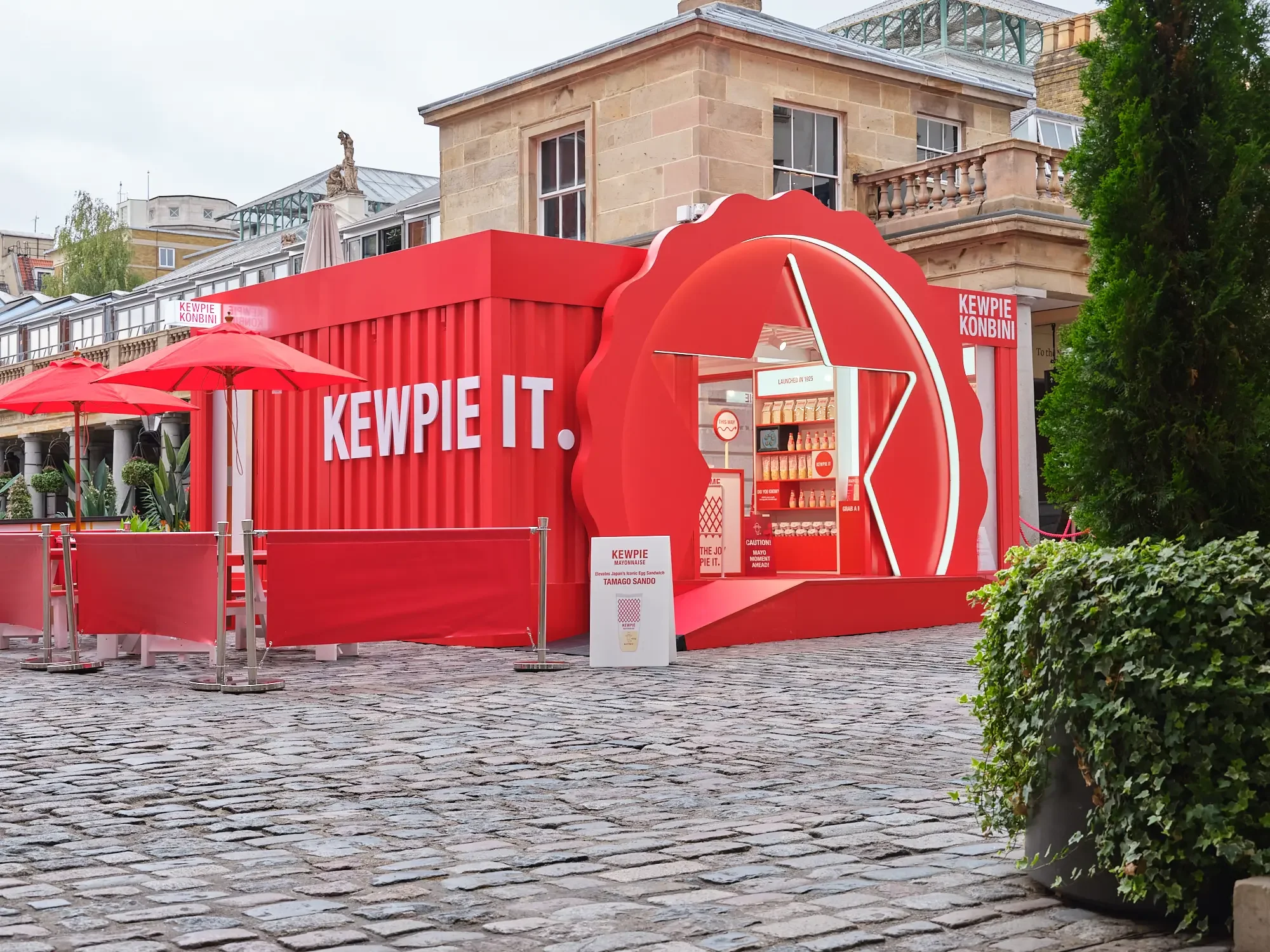
Kewpie Konbin - London 2026
Why Pop-Up Shops Continue to Grow in Popularity
Retail has changed since then, with customers now seeking out experiences rather than just completing transactions, and as a result, companies are looking for highly effective moments. A pop-up enables a brand to simply try out a new market, test out an idea, and create excitement all without having to bear the costs or face the long-term risks associated with a normal store. It's not surprising that pop-ups have become a regular feature of marketing schedules in the beauty, fashion, fragrance and FMCG sectors, especially in a city where a well-located activation can secure national press coverage within a single weekend.
What Is a Pop-Up Shop and Why Do Brands Use Them?
A pop-up shop is a temporary retail space, anywhere from a single day to a few months. Designed to sell products, launch a range, or create a memorable brand moment. Unlike a permanent store, its entire purpose is impact: hype, sampling, social content and direct customer connection within a tight window. Brands use them to test new markets, celebrate anniversaries, support product launches, or give loyal customers a physical space to engage with a brand they usually only know online.
Define Your Objectives and Success Metrics
Before a single venue is booked, be clear on what "success" looks like. Are you chasing sales, sign-ups, sampling numbers, social reach or brand awareness? Different objectives shape different decisions. A sales-led pop-up needs a high-footfall retail pitch, while a brand-awareness activation might prioritise a striking, photogenic location instead. Setting hard KPIs upfront gives you a benchmark to design against and report on afterwards.
Choosing the Right Pop-Up Shop London Location
Location can make or break a pop-up. London offers everything from high-footfall shopping centres like Westfield to "secret" spots on streets like Greek Street, and heritage venues such as The Stables in Covent Garden or Old Spitalfields Market. The right decision depends on your
audience: a fragrance launch aimed at Gen Z might thrive in an unconventional Soho spot, while a mass-market FMCG brand may need the guaranteed footfall of a shopping centre. Strong landlord relationships matter here; the best sites rarely sit on the open market for long, so working with a team who already has access is a real advantage.
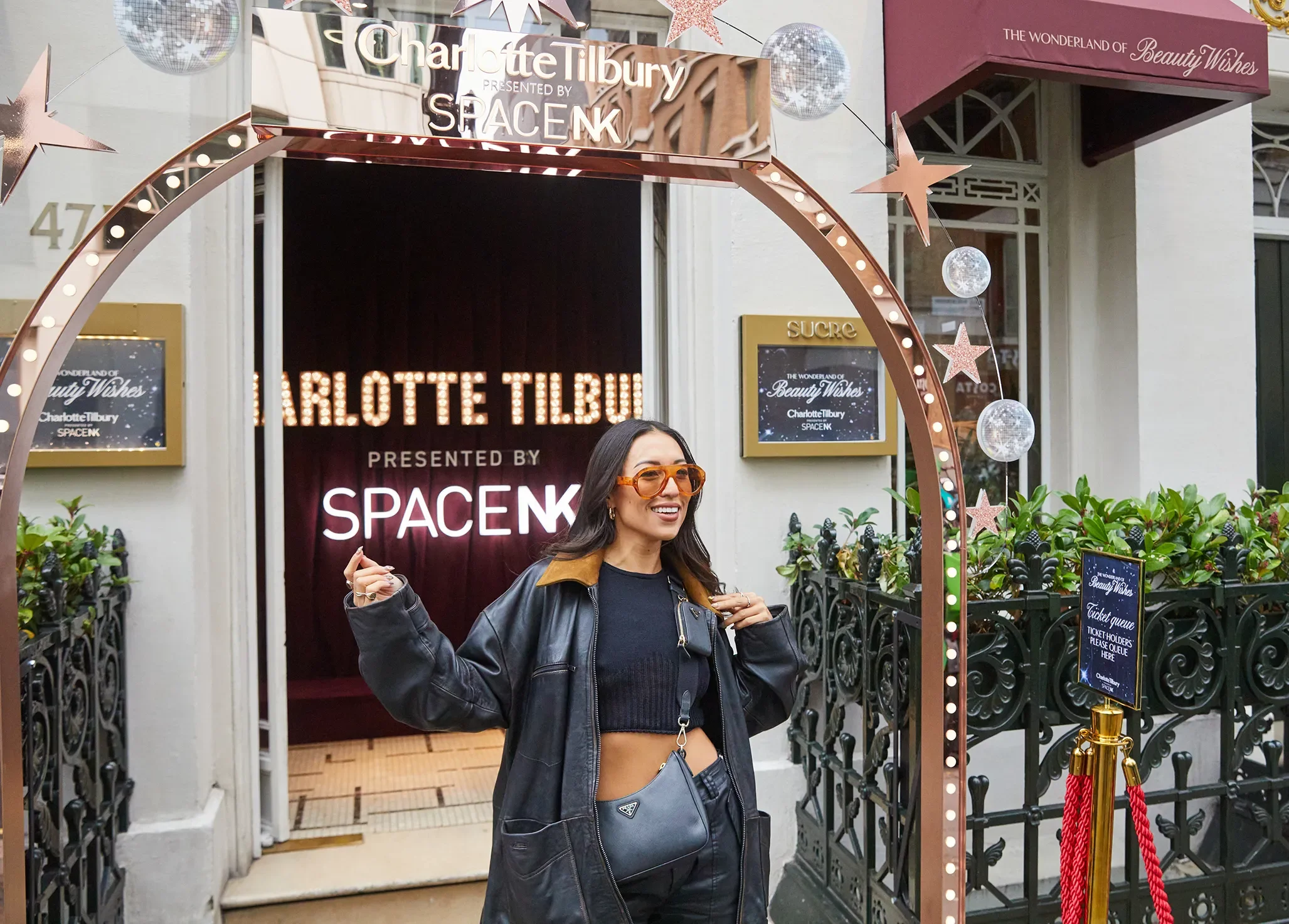
Charlotte Tilbury - Space NK Christmas Pop-up 2025
Designing an Engaging Customer Experience
Whether a pop-up is a success or a failure depends on how it feels to enter it. The most successful events design multi-sensory, "shareable" environments. This includes immersive settings, interactive product stations, and photo opportunities designed for social sharing. Each visual element and point of contact should reflect the brand's essential characteristics rather than look like a standard stand. The aim is to transform a casual visitor into an engaged fan, and then an engaged fan into organic social content.
Marketing Your Pop-Up Shop Before Launch
No matter how attractive the space appears, it still requires an audience. The pre-launch marketing plan must include organic social media teasers, influencer seeding, and local public relations, all coordinated with the physical setup so that the online and offline experiences match. By working with influencers before the opening day, a large amount of exposure can be achieved even before any customer has walked in the door. Meanwhile, press invitations assist in obtaining earned media coverage in the days that come after.
Managing Logistics, Staffing and Operations
Each smooth-running pop-up involves a huge amount of logistical work, including finding suitable locations, negotiating the budget, sourcing the materials, carrying out the installation and later dismantling the setup, as well as continuously managing the Health & Safety and RAMS documentation. Just as important is having the right staffing; the people on the ground must be properly trained in the brand, the products and the messaging so that the customer experience matches the original aims of the pop-up. It is in this area that an experienced partner proves their value by dealing with all the administrative hurdles so that the brand team can concentrate on the broader strategy.

Jo Malone London - Christmas Pop-up 2024
Measuring Performance and ROI
Success must be assessed using both hard and soft metrics; while footfall and sales figures are important, so are influencer reach, social shares, and the number of new customers acquired. A well-run pop-up event is capable of turning a large percentage of visitors into first-time buyers, which demonstrates that a good physical experience is one of the most effective methods available for acquiring customers. By comparing the results with the KPIs established at the beginning, one can determine whether the investment has been worthwhile and thus build a case for future events.
Common Pop-Up Shop Mistakes to Avoid
The most common errors can be prevented by selecting a location not on the basis of price but because of its suitability for the intended audience, by not allowing enough time for building and hiring, by omitting pre-launch marketing, and by not planning how success is to be measured. Another frequent source of difficulty is compliance permits, licences and RAMS documentation, which all take time to obtain and can cause a delay in the launch if arranged too late. Including a realistic timeline, normally three to six months for a high-spec build, helps to prevent a hasty outcome.
Conclusion:
In order for a pop-up shop launch in London to be a success, it is necessary to set clearly defined objectives, select the right location, design an experience that is worth talking about, and have a team that is able to look after the logistics without losing sight of the creative vision. After these points have been dealt with, a pop-up event can do more for a brand in just a few days than conventional marketing could in several months. If you are planning your next activation, then please get in touch with Backlash we would be happy to help make it a reality.
Frequently Asked Questions
-
A pop-up shop is a temporary retail space set up for a short, defined period. Anywhere from a single day to a few months. It works by giving a brand a physical presence to sell products, launch a range or create an experience, without the commitment of a permanent lease.
-
Costs vary widely depending on location, build complexity and duration, ranging from a few thousand pounds for a simple stand to six figures for a high-spec, multi-week takeover. Key costs include venue hire, design and build, staffing, and marketing.
-
It depends on your audience and objectives. High-footfall shopping centres suit sales-driven launches, while non-traditional spots in areas like Soho or Covent Garden work well for brand-awareness or hype-led campaigns. The strongest locations are usually secured through existing landlord relationships.
-
Many successful London pop-ups run for anywhere between three days and a few weeks, though some extend to a few months. The right duration depends on your goals, shorter runs build urgency plus hype, while longer runs allow to sustain sales and customer engagement.